Use this simple hack to decode the best before dates on fruit and vegetables to make sure you get the freshest produce.
A carrot doesn’t have a best before date when harvested from the ground, so why do they in a shop?
Shops essentially print the dates as a way to tell when food should get a yellow sticker added, if it’s not sold in time.
Get a free £10 bonus with Swagbucks
Earn a bit of extra money in your spare time with surveys, videos, and simple tasks you can do at home.
New users can get a £10 bonus when they sign up.
Get the £10 bonus
However, shoppers use these dates as gospel, and millions of pounds of food is thrown away each year.
Some supermarkets removed the dates from fresh produce, such as fruit, vegetables, and milk, to reduce food waste.
As consumers, we need to use our judgment (the sniff test, etc.) to determine whether the food is still edible.
But when you want to buy something, how do you know it will last and stay as fresh as you need it?
Hack to decipher best before dates
Instead of printing the date, supermarkets, like Tesco, have instead come up with a code for staff to use.
Using codes helps supermarkets in a few ways.
First, it keeps the food fresh when we buy it. Nobody wants to buy something that’s off!
Second, it makes it easier for the staff to find out which food they need to sell first – what should remain on the shelves or be yellow-stickered or removed from sale.
There is an easy way to decode them!
@skintdad Use this simple hack to decode the best before dates on fruit and vegetables to make sure you get the freshest produce 🥕 🧅🥦 Have you done this before? #MoneyTips #SkintDad #SaveMoney #MoneySaving #FoodShop #GroceryShopping #FrugalLiving #FoodWaste ♬ Write This Down (Instrumental) – SoulChef
Here are a few examples – you now get a code with a letter and number:
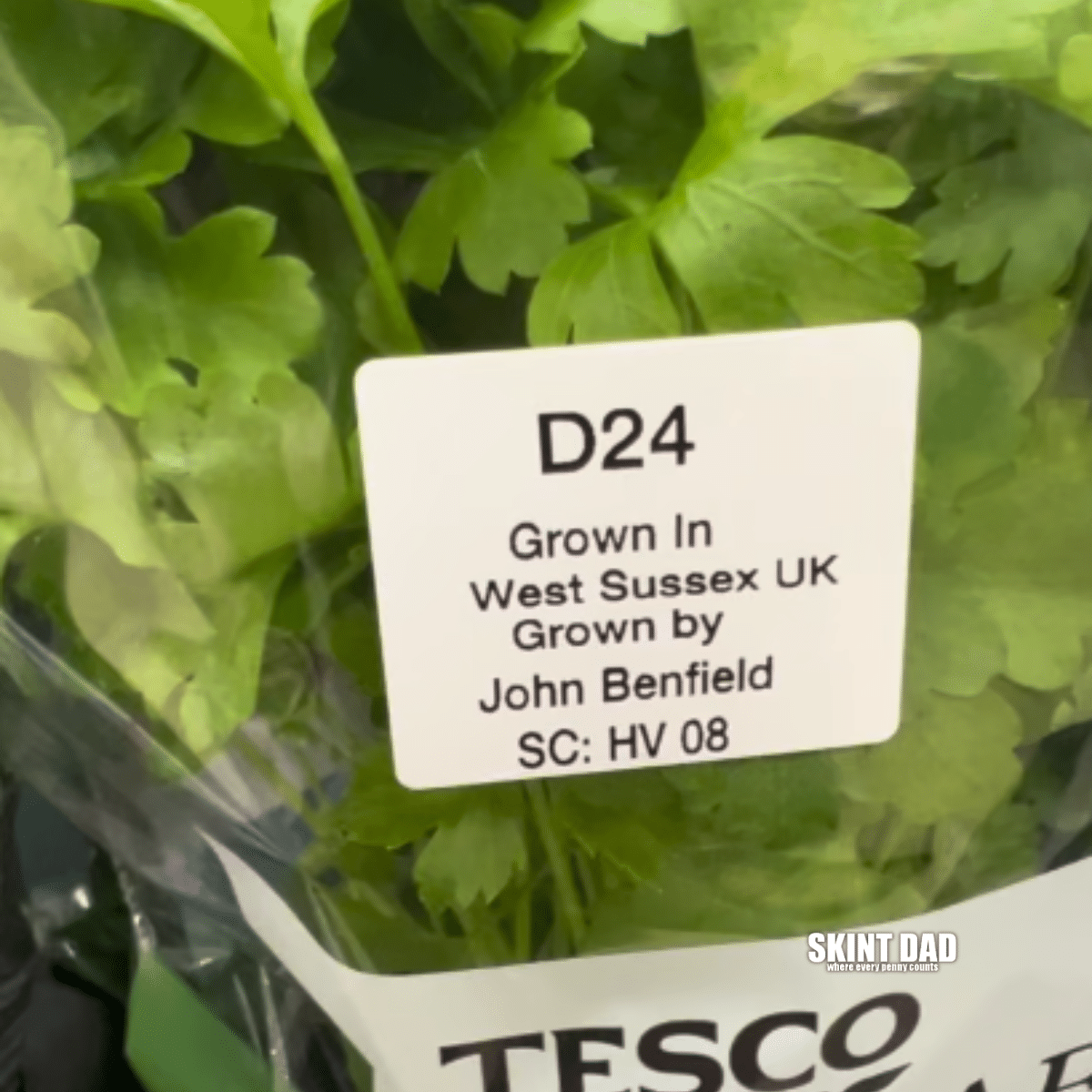

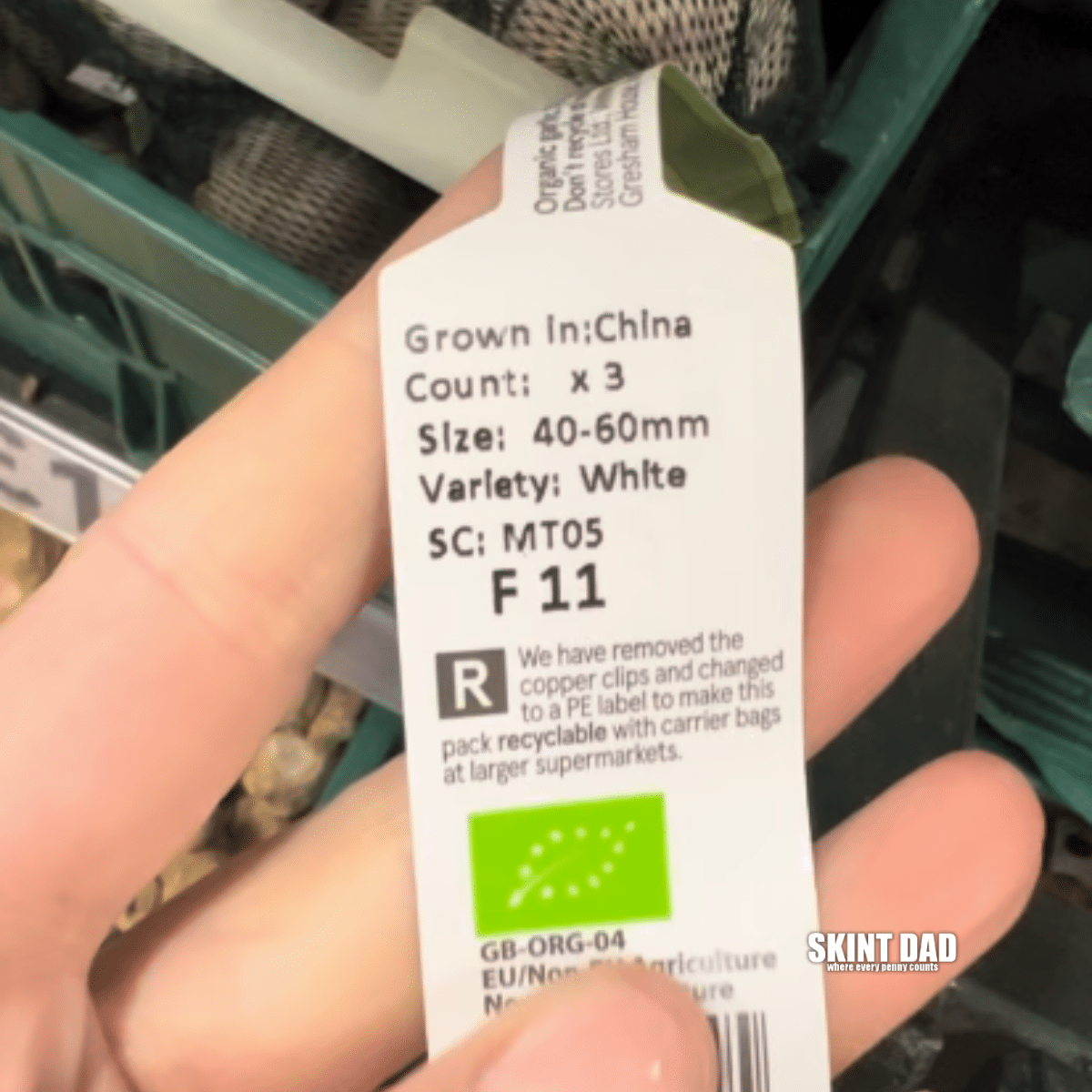
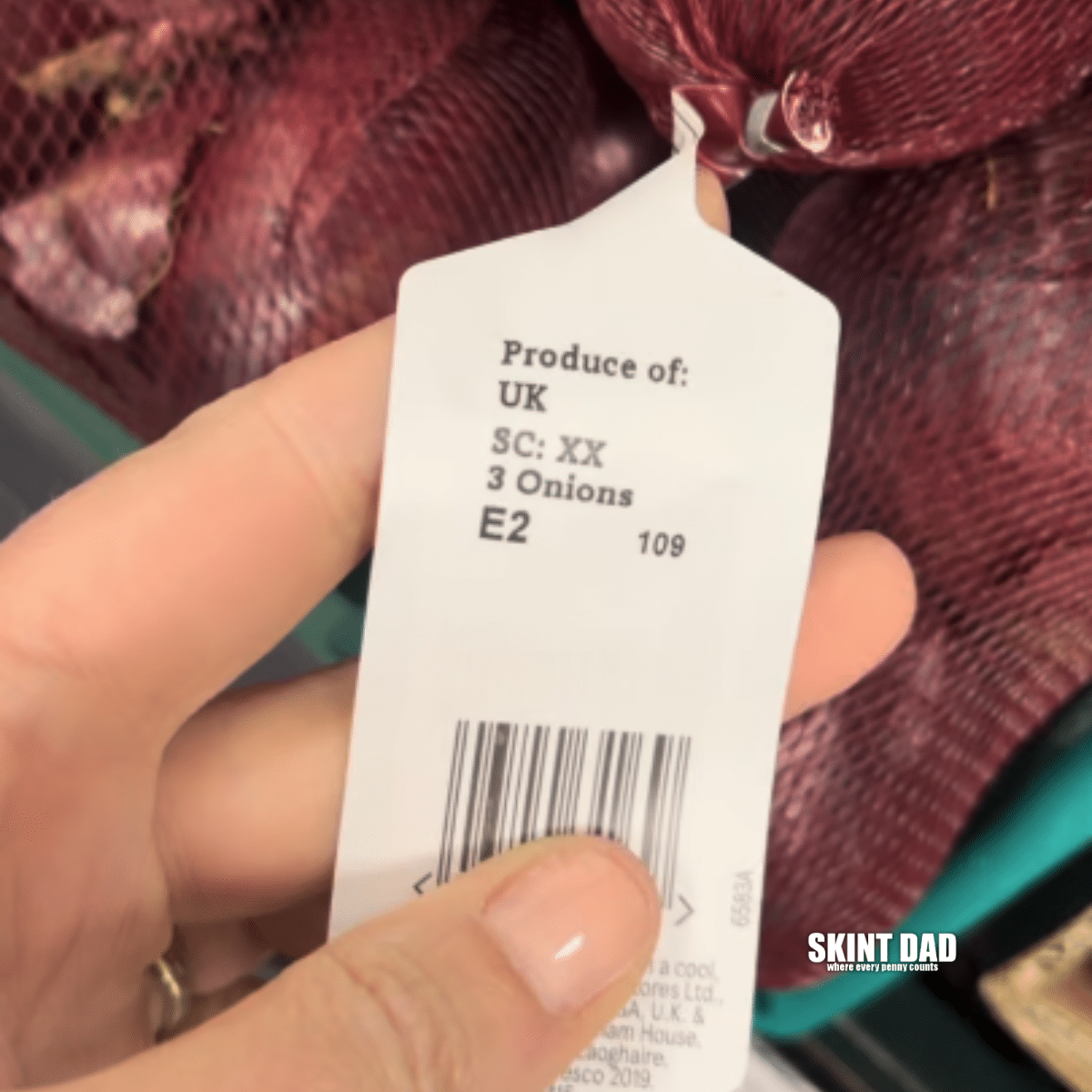
The codes are pretty easy to understand once you know how.
There’s a letter for each month: “A” for January, “B” for February, and so on, until “L” for December.
Then there is a number that tells you the day.
So, “D24” would mean April 24th, and “F11” is June 11th.
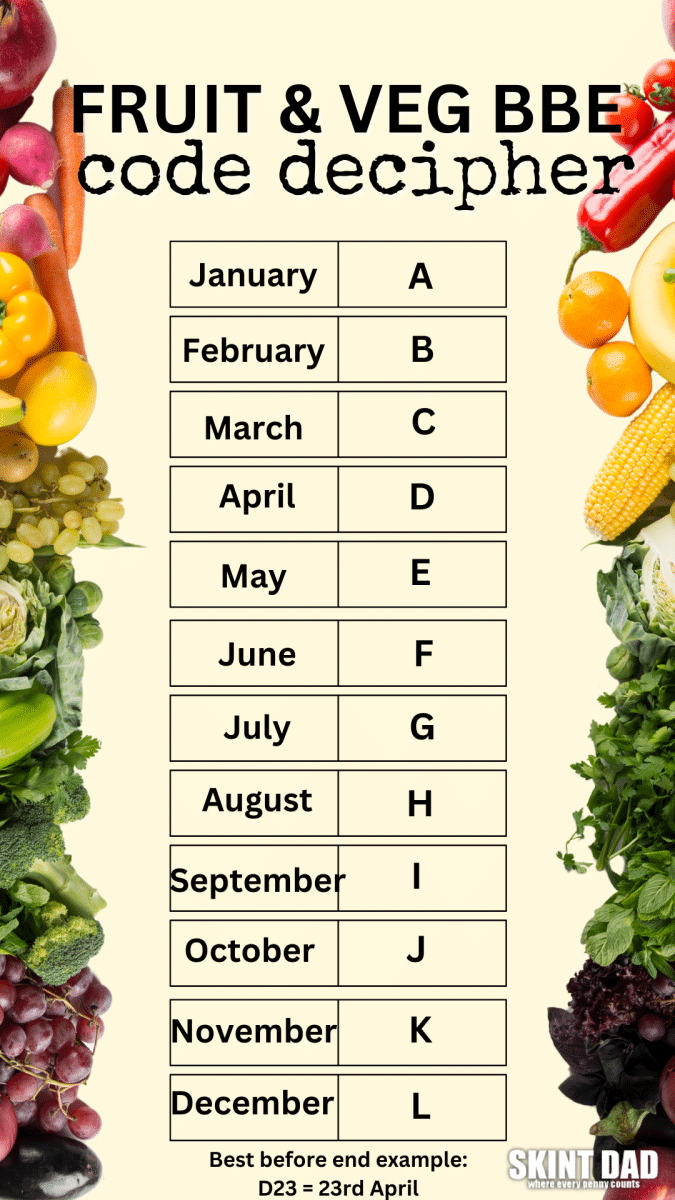
Knowing this code can be a neat little trick even if you don’t work at a supermarket.
Next time you’re shopping, have a look at the codes and choose the freshest options.
This is a simple way to make sure you’re getting the best value for your money.
Saved a few quid with our tips?
If Skint Dad has helped you spend less or feel more in control of your money, you can support the site with a small contribution.

- I was sent a fake HMRC tax notice. Here’s how to spot the scam - 8 January 2026
- A once-a-year money check most families forget (with rough savings) - 6 January 2026
- The January bills reality check: the traffic light method that works - 1 January 2026

Stuart Shaw says
Well well, OK I can understand this process if applied to chicken, milk, Pork, eggs, etc…. Apart from cuts of beef ( bright red bloody steaks vac packed at supermarkets ) Lamb and any game meat again all not hung, all in vacuum packs and all taste like ( nothing )
NO TRUE FLAVOUR
Now as for BEST BEFORE DATES ON VEGETABLES: I think it’s a bit crazy that they have done away with this at various supermarkets,
OK YES, I’m a qualified chef Michelin star trained we never had stickers, the head chef as all of us knew when things were fit for the bin ( AND THAT NEVER REALLY HAPPENED)
I’m just a little pissed off as I buy a bag of carrots and now only 2 possibly 3 weeks they are mouldy
Have a word people
I know when food is good and how long it should last within a standard household refrigerator
I truly think that removing BBD of vegetables and replacing with a CODE I truly believe no one of a certain persona will understand or even be able to work out the date code
I’ve shopped at ASDA for a fairly few years never a problem
I truly think there is more to this very strang act
Regards
Stuart Shaw