I received two suspicious messages on Thursday 19 November, both from the same mobile number and both containing links to different websites.
There was no explanation in either message. Just a link.
The first went to mljhh[.]com, while the second used uwjow[.]com.
I followed the first link to see what was going on, and it took me to a website pretending to offer a Cadbury Christmas chocolate gift box.
What happened next showed just how these fake giveaways encourage people to spread them.

What happens when you follow the link?
The website looked like a Cadbury promotion, complete with the purple branding, Christmas chocolates and a large chocolate hamper.
It started with a four-question quiz asking whether I knew about Cadbury’s Christmas promotions.
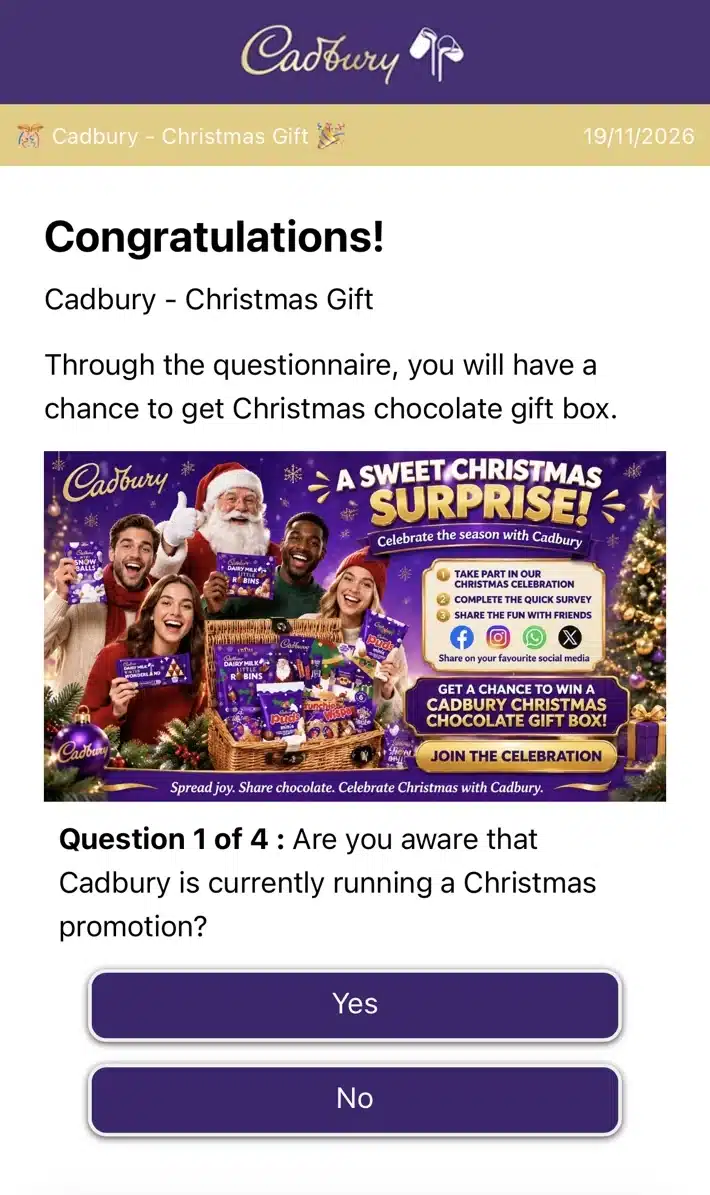
There were also comments from people supposedly celebrating their prizes, including one claiming they had already received their gift.
There was no way to verify whether those comments were genuine.
After the questions, there was a game where you could choose from gift boxes, with up to three attempts.
Then came the congratulations message.
Apparently, I’d won a Christmas chocolate gift box!

Make your money go further
Money news, useful deals and practical ways to save or earn a bit extra.
From Ricky at Skint Dad, every Sunday morning. Free.
By joining, you agree to receive The Skint List by email. Unsubscribe at any time. Privacy policy.
But there was a catch.
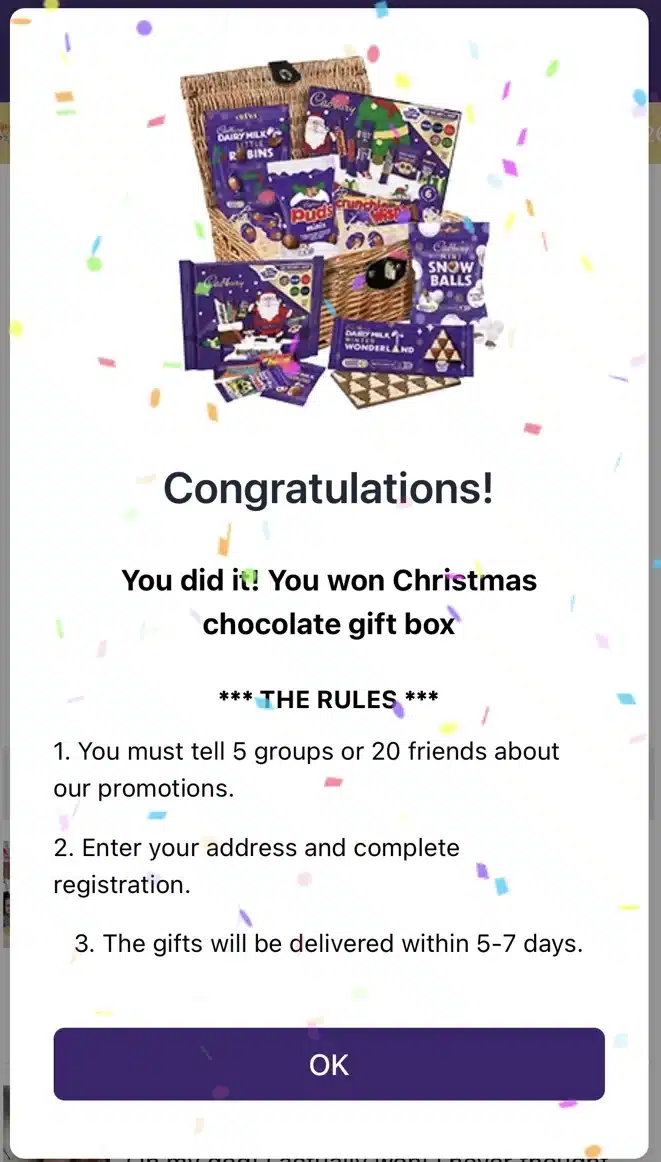
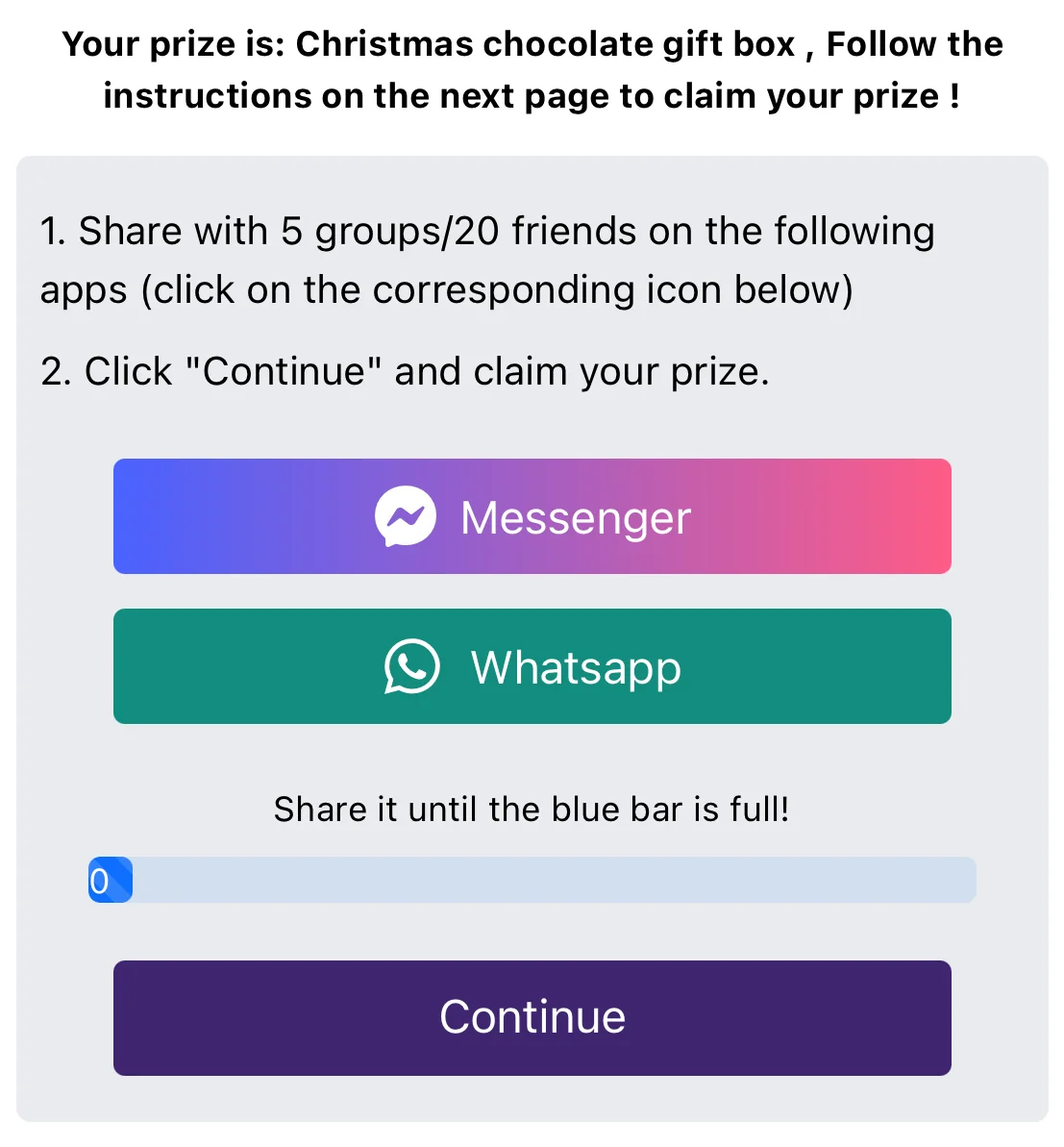
Before claiming the prize, the website instructed me to share the promotion with five groups or 20 friends through WhatsApp or Messenger.
It even had a progress bar to encourage people to keep sharing.
The page also said I’d need to enter my address and complete registration to receive the gift.
I haven’t verified what happens after that stage, and there’s no evidence that a genuine prize would be delivered.
This Cadbury scam has appeared before
What’s particularly interesting is how closely this matches an older scam.
Consumer group Which? warned about a fake Cadbury Christmas giveaway in December 2025, having first reported it in 2022.
That version also involved answering four questions, choosing a prize box and being told to share the link with five groups or 20 friends.
It’s remarkably similar to what I’ve just seen.
We’ve previously covered how to spot fake supermarket giveaways and voucher scams, including offers that encourage people to share links before claiming a prize.
Cadbury does have a genuine Christmas giveaway
Cadbury is running its official Secret Santa Postal Service between 2 November and 20 December 2026.
It allows people to send a free chocolate bar to someone else, subject to availability.
However, you take part by finding an official Cadbury Secret Santa poster and scanning its QR code.
You don’t need to complete a random chocolate hamper quiz or share a suspicious website with 20 friends.

Skint Dad says:
The bit that bothers me most isn’t even the promise of free chocolate. It’s being told to share the link with other people before you can claim anything.
Someone might think they’re doing their friends or family a favour by passing on a free giveaway.
Instead, they could be helping spread a scam without realising it.
And when the message comes from somebody you know, you’re probably more likely to trust it.
That’s why I’d always check a company’s official website before sharing any giveaway, no matter who sent it.
What should you do if you receive one?
Don’t open the link, answer the questions or share it with anyone else.
You can report suspicious SMS messages by forwarding them to 7726 for free.
If you’re using an iPhone, you can also use the Report Spam option. This is particularly useful for suspicious iMessages.
You can find more details in Ofcom’s official reporting advice.
If you’re unsure whether another message is genuine, we’ve also tested a free scam checker that can help you assess suspicious texts and websites.
What if you’ve already clicked?
If you’ve only opened the website, close it without entering any information. Simply visiting a page doesn’t automatically mean you’ve been scammed.
If you’ve entered your address or other personal details, be wary of further suspicious messages.
Change any passwords you’ve entered. If you’ve shared payment details or sent money, contact your bank immediately.
You should also contact your mobile provider if you’re worried about something you’ve clicked or downloaded.
If you’ve lost money or believe you’ve been hacked, report it to Report Fraud, or Police Scotland on 101 if you’re in Scotland.
It’s worth warning friends and family too, especially if you’ve already shared the link with them.