Why these job emails feel so convincing
Some job offer emails feel good to receive. They use your name, mention skills you already have, and sound like someone has noticed you for the right reasons.
That reaction is exactly what these scams rely on. And, it almost got me for a second!
Unlike some of the early scams with typos etc, these are carefully written to feel calm, professional, and friendly.
Get a free £10 bonus with Swagbucks
Earn a bit of extra money in your spare time with surveys, videos, and simple tasks you can do at home.
New users can get a £10 bonus when they sign up.
Get the £10 bonus
There is no obvious pressure at first. Instead, the email makes applying sound easy and positive, which lowers your guard.
The example I have received (Skint Dad got one too from a different company) used a well-known brand, but this approach can be copied by anyone.
The company name changes. The tactics stay the same.
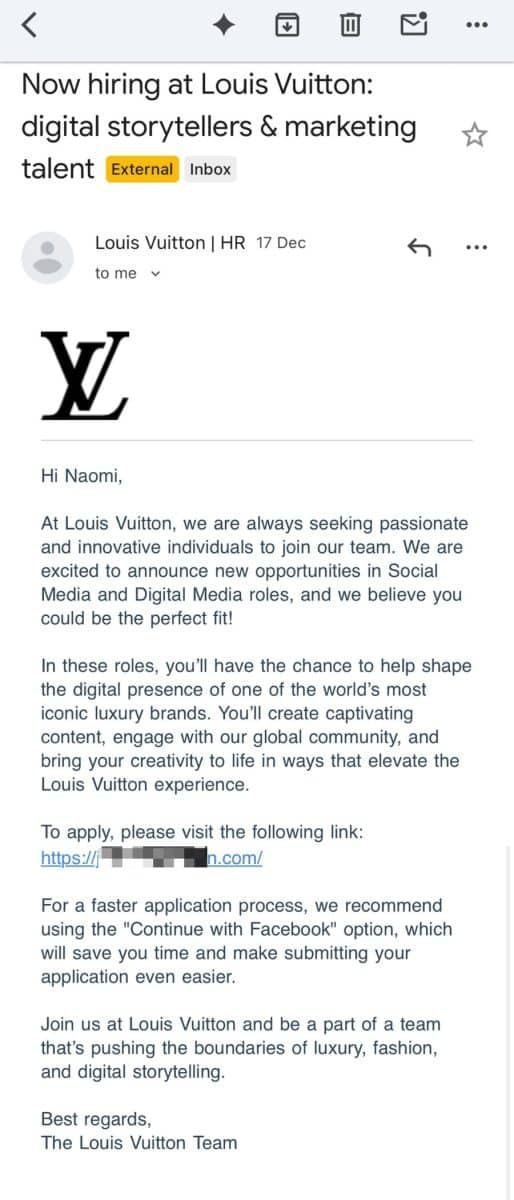
Here’s an example of the scam email. Can you spot the red flags?
What usually happens after you click
Once you follow the link in one of these emails, you’re normally taken to a site that looks EXACTLY like a careers page. The design often matches the real thing closely, which makes it easy to trust.
The problem is how the site behaves.
Real job sites expect you to search for roles and apply for a specific position. Scam sites often rush you straight into applying without clearly explaining what the job actually is.
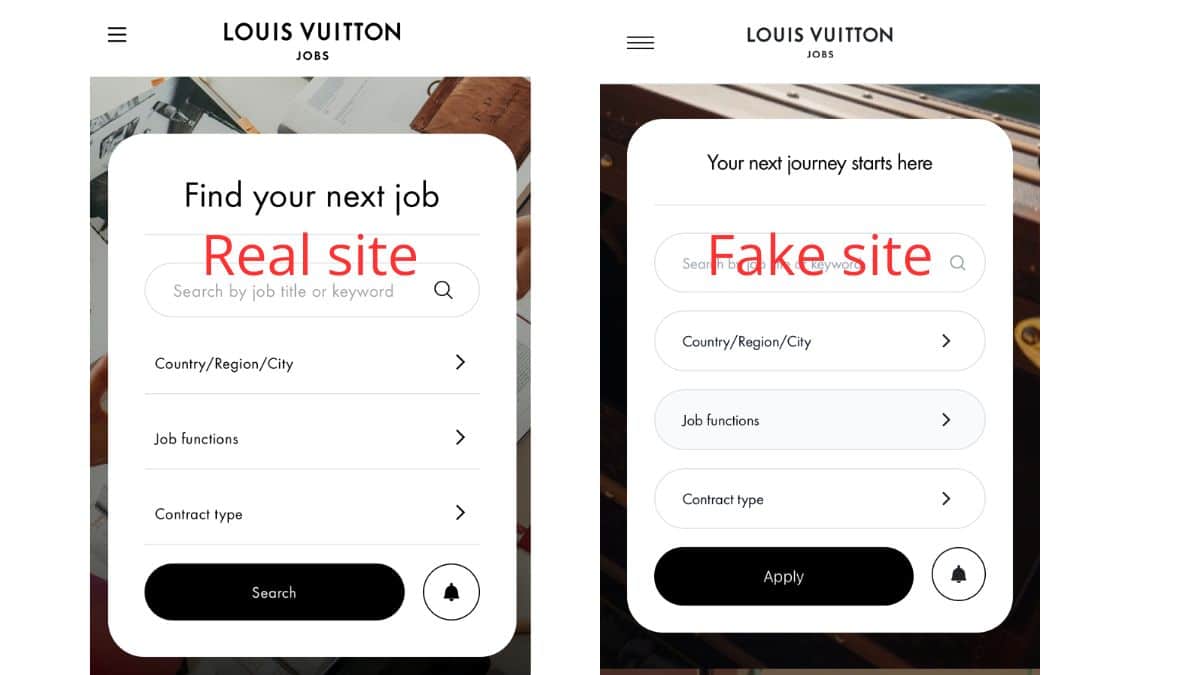
If you are being asked to apply without seeing a proper job title, location, or description, that’s a warning sign.
The website detail people often miss
A small difference in a web address can matter more than the page design.
Fake careers sites often use addresses that look right at a glance, with extra words added or a slightly different structure. Everything else is designed to copy the real site, including logos and layout.
A genuine careers site will usually:
- show a list of open roles
- let you search or filter jobs
- clearly explain what you are applying for
If none of that is there, it’s worth stepping back.
Why social media logins are a big red flag
Some fake job sites encourage people to apply faster by using options like “continue with Facebook”.
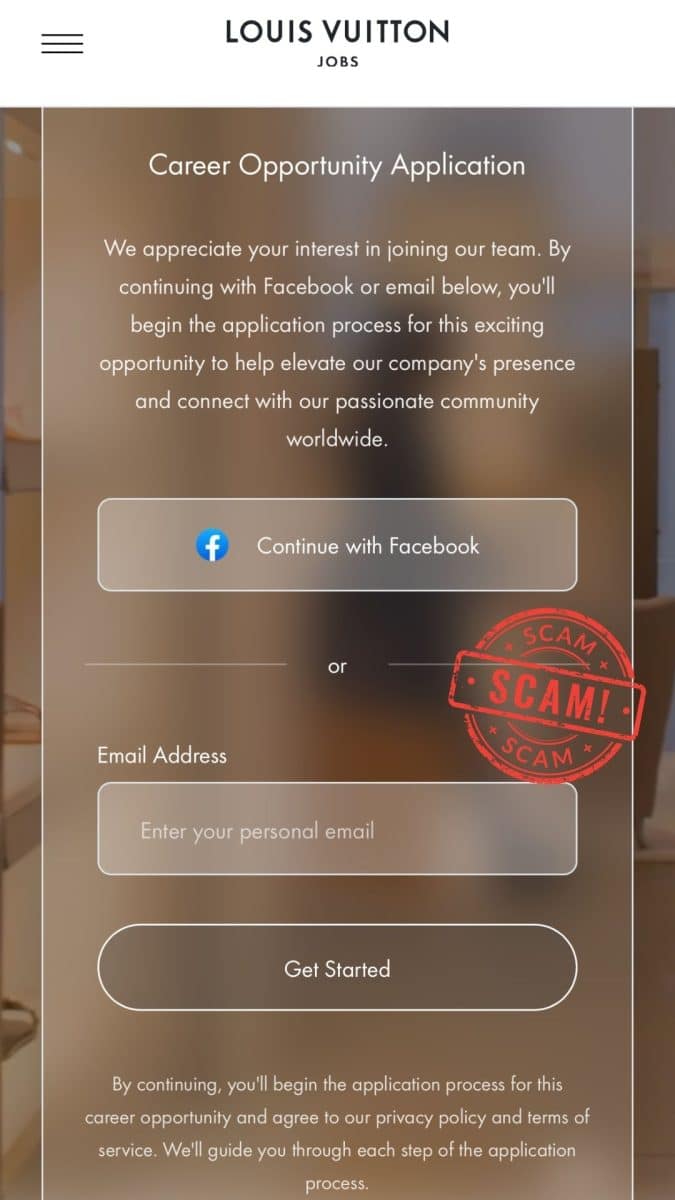
Being asked to apply for a job using a social media login should always make you stop and think.
Real employers do not need access to your Facebook, Google, or other social accounts to review an application. A CV, a cover note, and contact details are more than enough.
When a site pushes social logins, it’s often because collecting data matters more than filling a role.
Logging in this way can share far more information than people realise.
Depending on what you approve, it may give access to your name, email address, profile details, and sometimes your contacts. Even if nothing obvious happens straight away, that data can be stored, sold, or used to target you with more convincing scams later.
It may feel like a quicker way to deal with an application, but it comes with a real risk.
You’re encouraged to click once and move on without reading carefully or questioning what you’re agreeing to. That suits scammers, not genuine recruiters.
Don’t ignore the sender’s email address
The email may show a trusted company name, but the address it comes from matters far more than the logo at the top.
Scam job emails often come from:
- generic mailing services
- addresses that don’t match the company website
- domains that feel slightly off
Large employers almost always recruit using their own official email domains.
How to check a job email without taking risks
If a job email feels unexpected or unusually easy, slow things down and check it safely.
The simplest approach is:
- don’t click the link in the email
- visit the company’s website yourself
- look for the job role independently
If the role is real, it will exist outside that one message.
What to do if you receive one of these emails
If anything feels off, trust that feeling.
Do not log in, do not share details, and do not reply. Mark the email as spam or phishing and delete it.
If you have already clicked or logged in, change your passwords and review your account security as soon as you can.

Skint Dad says:
Job scams don’t work because people are careless. They work because they feel normal, flattering, and easy.
Taking a moment to pause can save a lot of hassle later.
Saved a few quid with our tips?
If Skint Dad has helped you spend less or feel more in control of your money, you can support the site with a small contribution.

- I was sent a fake HMRC tax notice. Here’s how to spot the scam - 8 January 2026
- A once-a-year money check most families forget (with rough savings) - 6 January 2026
- The January bills reality check: the traffic light method that works - 1 January 2026
