Been offered a remote job by text that pays hundreds of pounds a day for a few hours’ work a day? Here’s what’s really going on.

If you’ve had a message out of the blue claiming your CV is getting loads of attention and offering you a remote job earning up to £8,000 a month for an hour a day – you’re not alone.
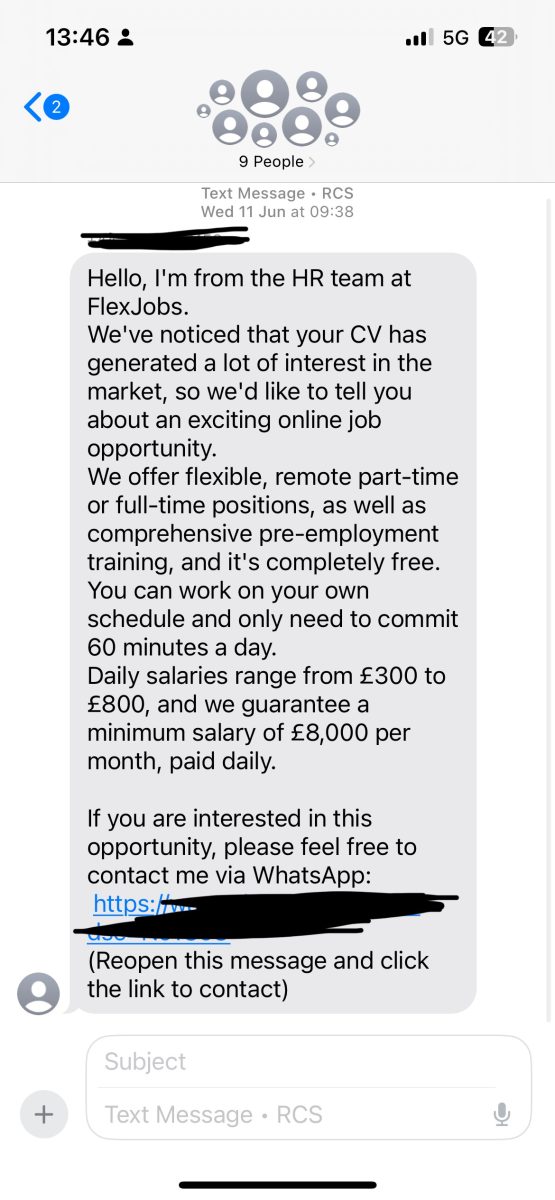
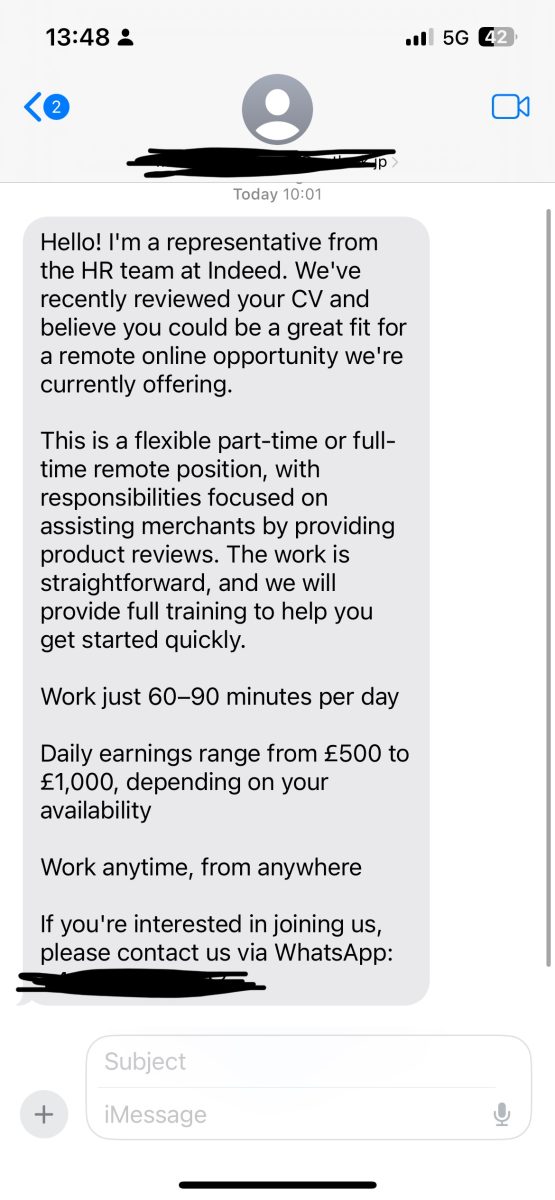
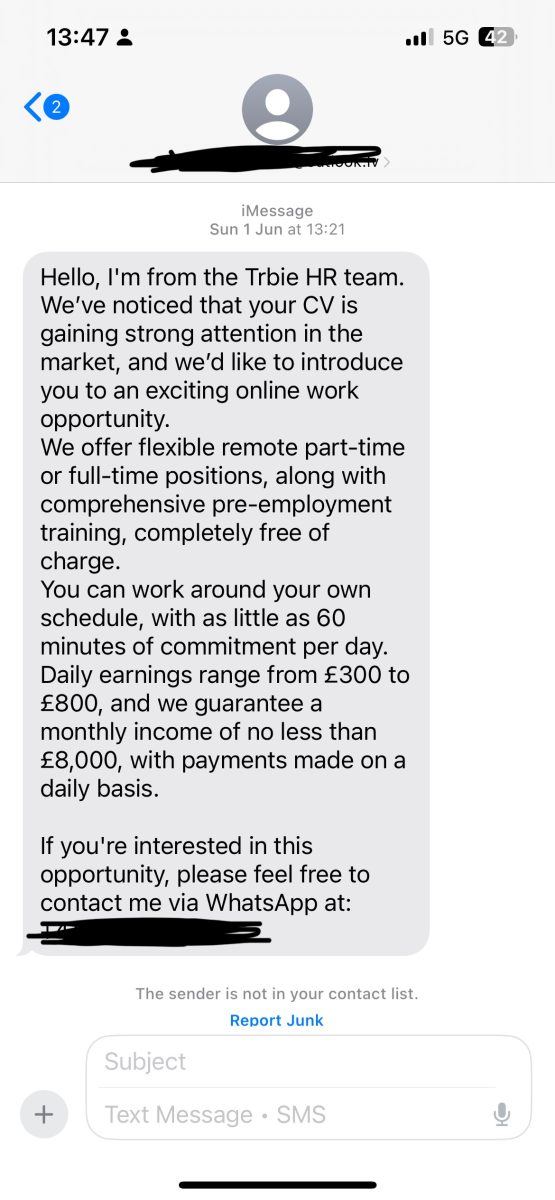
I’ve seen several versions doing the rounds. They claim to be from FlexJobs, Indeed, or something that sounds a bit job-related like “Trbie HR”. They say they offer flexible part-time or full-time work, free training, and daily payments.
Get a free £10 bonus with Swagbucks
Earn a bit of extra money in your spare time with surveys, videos, and simple tasks you can do at home.
New users can get a £10 bonus when they sign up.
Get the £10 bonus
Sounds great, right?
Except it’s a scam.
Why these job texts are fake
Let’s break it down:
- You never applied for anything. Legitimate companies don’t text strangers out of nowhere about job offers.
- The pay is way too high. £300 to £800 a day for 60 minutes of work? That’s more than most doctors, engineers, or barristers earn. It’s not realistic.
- They want you to move to WhatsApp. This is a big red flag. Once they get you off official platforms, it’s easier to manipulate you without being reported.
- They copy and paste the same message. Different names, same wording. This shows it’s part of a wider scam operation and is not a real job offer.
Here are some examples of the scam job messages I’ve received.
Their real goal: your money or your data
Here’s what usually happens if you reply:
- They pretend to “interview” you. This will most likely by message, so you cannot tell when in the world they’re from.
- They ask for your details: name, address, CV, maybe even ID or bank info.
- Then comes the ask: a payment for “training”, “equipment”, or “setup fees”.
- Once they have what they want (your money or personal info), they disappear.
In some cases, they might keep the scam going for weeks, giving you fake tasks and paying small amounts to keep you hooked before asking for a bigger sum.
“But what if it’s real?”
It’s not.
No real employer will offer you thousands a month without a proper application process, interview, or contract.
No real company will ask you to pay to start work.
And no legitimate recruiter will get in touch through random WhatsApp links sent to strangers via mass text.
What to do if you get a message like this
- Don’t reply. Even saying “not interested” can confirm your number is active.
- Don’t click any links. These could lead to dodgy websites or malware.
- Block the number and report it as spam or junk.
- Warn friends and family. These scams often target people who are job hunting or need extra cash, exactly the people who can’t afford to be scammed.
Final thoughts
Scams like this prey on people who are trying to do the right thing – find flexible work, earn money, and support their family. That’s what makes them so cruel.
If something sounds too good to be true, it probably is. Real work takes real effort, but you won’t find it in a random WhatsApp message promising thousands a month for an hour a day.
Stick to trusted job boards, check company websites directly, and never pay to get work.
Saved a few quid with our tips?
If Skint Dad has helped you spend less or feel more in control of your money, you can support the site with a small contribution.

- I was sent a fake HMRC tax notice. Here’s how to spot the scam - 8 January 2026
- A once-a-year money check most families forget (with rough savings) - 6 January 2026
- The January bills reality check: the traffic light method that works - 1 January 2026
