Power cuts are unlikely
You may have seen headlines about what would happen if the UK ever lost power nationwide.
The key point comes first: this scenario is described as very unlikely.
Even so, the UK has prepared public health advice in advance. Not because something is expected to happen, but because planning for unlikely events is part of basic resilience. Many countries do the same.
Get a free £10 bonus with Swagbucks
Earn a bit of extra money in your spare time with surveys, videos, and simple tasks you can do at home.
New users can get a £10 bonus when they sign up.
Get the £10 bonus
Rather than panic or speculation, or running out spending loads to try to prepare, we look at what the advice actually focuses on, why it’s structured the way it is, and what’s useful for households to know now.
This also isn’t a totally new thing, as they have been suggesting people have three months’ worth of supplies for any kind of emergency for some time.
What to know
If the UK ever faced a rare national power cut, this is what official health advice would focus on:
- Getting enough fluid each day
- Drinking safe liquids first
- Washing hands properly while saving water
- Not flushing toilets if sewage systems stop
- Using radio for updates
Why the advice would come through the radio
In a national power outage, many everyday services could stop working at once. That includes internet, TV, phone networks and electronic payments.
Because of this, emergency advice would be shared through BBC Radio 2 and Radio 4, which can be accessed using battery-powered, wind-up or car radios.
The prepared message would be repeated regularly, so people could hear it more than once and write things down if needed.
The opening message sets the tone clearly:
“We have planned in case this extraordinary situation happened and this advice has been created by doctors and scientists to help keep you and your family healthy.”
This is not a warning broadcast. It is a practical set of instructions designed to reduce health risks if normal systems stopped for a time.
What the advice focuses on first (and why)
The scripts focus on just a few priorities, repeated again and again. That repetition is deliberate.
The main risks officials are trying to reduce are:
- dehydration
- illness from unsafe water
- infection caused by poor hygiene
That’s why the guidance centres on water, handwashing and toilets, before anything else.
Water: what matters most
Adults are advised to aim for around two litres of fluid a day, which is roughly eight cups.
If cold tap water is still flowing normally, it remains safe to drink. Other safe options include:
- bottled water
- soft and fizzy drinks
- juice from tinned fruit
Strong alcohol is discouraged because it can dehydrate you.
The advice also makes it clear that water should be conserved. If supplies are limited, water should be used only for:
- drinking
- washing hands
- preparing food
Showering and bathing are not recommended while water is scarce.
If normal water ran out
Later guidance explains how other water sources could be made safer if needed. This includes rainwater, water butts, lakes or reservoirs, and even hot tap water, provided it is properly treated.
Filtering water through something simple like a pillowcase, bed sheet or coffee filter is suggested to remove debris. After that, water should be disinfected by boiling, purification tablets, or a very small amount of plain, unscented household bleach.
The scripts acknowledge that this advice may sound unusual, but stress it has been developed by medical experts and is safe if followed carefully.
For most households, the takeaway is not to learn these steps by heart. It’s to understand why having a small supply of drinking water at home removes a lot of uncertainty.
Handwashing and hygiene
One of the most surprising parts of the guidance is how handwashing is handled.
Households are advised to fill a large bowl with water and soap or disinfectant and use this for handwashing after using the toilet. Everyone in the home can share the same bowl, and it does not need replacing, even if it looks dirty.
Soap and water are preferred over hand sanitiser. Sanitiser is suggested only if soap and water are not available.
If someone in the household has diarrhoea, they should use a separate bowl.
This advice is about conserving water while still reducing infection risk.
Toilets
If sewage systems stop working, toilets will not flush.
The guidance is direct: do not try to flush. Waste should be collected in plastic bags, sealed, and placed with household rubbish, ideally in an outside bin.
It is practical advice designed to protect health, not something expected in normal life.
Families with babies and young children
The scripts include more detailed advice for households with babies and toddlers, especially around fluids.
Children under two need careful monitoring to make sure they are drinking enough. Formula preparation should use the cleanest available water, and breastfeeding should continue as normal.
This level of detail reflects the higher health risk for very young children if they become dehydrated.
Illness and rehydration
If someone has diarrhoea, staying hydrated is especially important.
The guidance includes the option of using hydration sachets if available. It also explains how a basic rehydration drink can be made at home using sugar, salt and bicarbonate of soda.
This advice exists for situations where shops and pharmacies may not be accessible.
What preparedness actually means
Preparedness does not mean stockpiling or spending money.
The advice assumes households are using what they already have and making sensible decisions. Useful basics include:
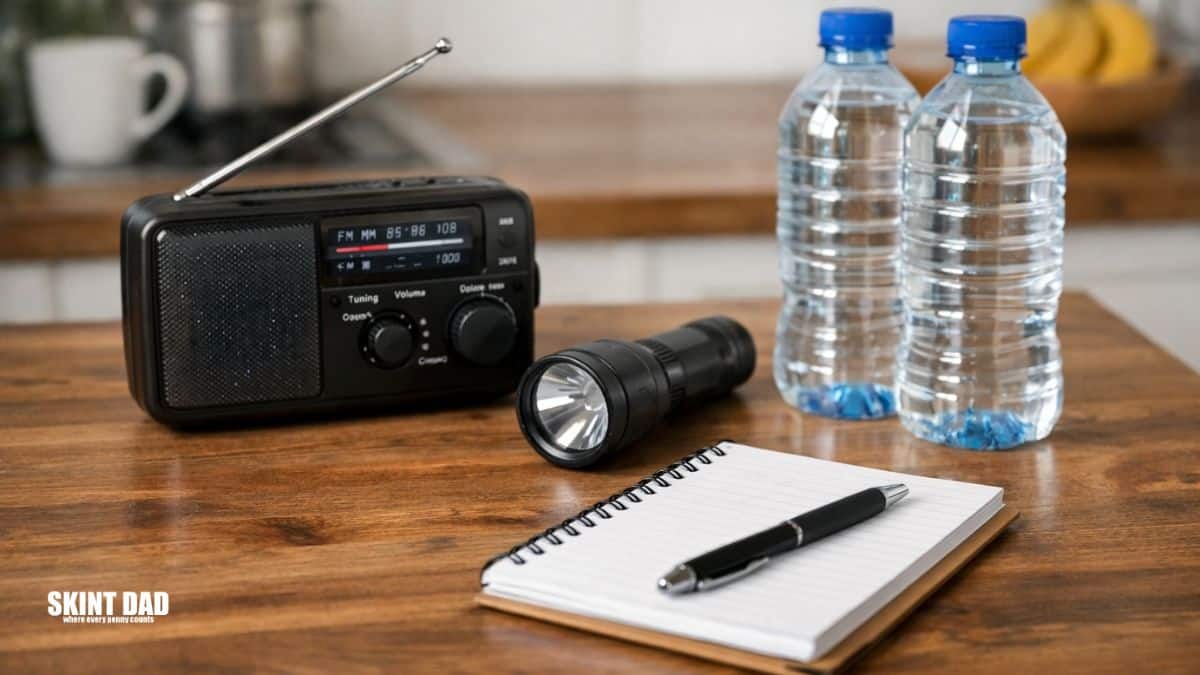
- a battery-powered or wind-up radio
- a torch with working batteries
- some bottled water
- soap and basic hygiene supplies
These are ordinary items that are useful in many situations, not just rare national ones.

Skint Dad says:
This guidance exists so that, if something unusual ever happened, people would already know the basics.
It doesn’t mean a power cut is coming. It means planning has been done quietly in the background, so households are not left guessing.
Being prepared isn’t dramatic. It’s practical. And most of it costs nothing at all.
Saved a few quid with our tips?
If Skint Dad has helped you spend less or feel more in control of your money, you can support the site with a small contribution.

- I was sent a fake HMRC tax notice. Here’s how to spot the scam - 8 January 2026
- A once-a-year money check most families forget (with rough savings) - 6 January 2026
- The January bills reality check: the traffic light method that works - 1 January 2026
