Find out the UK food shop costs for families, singles, and couples, including trends, regional differences, and smart budgeting tips.

Have you ever wondered how much the average family or household in the UK spends on their weekly food shop?
Knowing how much others spend can help us set our own budgets, keep bills on track, and find ways to save.
Get a sign-up bonus with Swagbucks
Earn a bit of extra money in your spare time with surveys, offers and other simple tasks you can do at home.
New users can currently get a bonus when they sign up.
Claim sign-up bonus
Today, we’re diving into the world of grocery bills – whether you’re flying solo or part of a family of four.
Depending on how many people are in your household, it can make a difference to the average cost per person.
It’s not just about multiplying a one-person spend by four (if that’s how many people live in your home). Homes with more people will generally spend (on average) less per person as you can take advantage of bulk buys and discounts on bigger pack sizes.
Understanding the UK’s food spending habits
Over the past decade, we’ve seen massive shifts in our food shopping habits.
One of the biggest changes has been the steady increase in spending.
This isn’t just due to rising food prices; it also reflects a change in our eating patterns and preferences.
A few years ago, the trend was towards value and convenience, with a boost in the popularity of budget supermarkets and ready meals.
However, recent years have seen a growing interest in health and sustainability, with more people willing to spend a bit extra on organic produce, plant-based options, and environmentally friendly packaging.
It’s not just about what you shop for – where you live in the UK also plays a role in your food spending. Typically, urban areas, especially in the South of England, see higher food expenditures than rural areas.
Lifestyle and dietary choices also have a big impact on food spending. A household of vegetarians or vegans might spend less on average compared to those who include meat in their diet, as meat tends to be more expensive.
Similarly, households with specific dietary needs, like gluten-free or dairy-free, will find their grocery bills a bit higher due to the premium price of these specialised products.
But, for an overall view, let’s look at how much people spend on groceries.
General average food bill
The average person in the UK spends about £62.20 each week on food. This also includes spending on non-alcoholic drinks like tea/coffee, fruit juices and squash.
That might not seem like a lot (or maybe it does?)
This figure includes everything from your morning cereal to the cheeky chocolate bar you treat yourself to after work.
However, these figures are based on survey data to the end of 2022 (as soon as new data is released, we’ll update).
Up to January 2024, food prices continued to soar by 8%! Around 40% of people have had to spend more money when food shopping to get their usual trolleys, and survey results from October 2023 show that 47% of people are buying less than they usually do.
Remember, this is just an average – some spend more, and some spend less, particularly on a week to week basis.
For instance, I don’t buy washing detergent every week, and I try to budget for cheaper meals when I know we’ll have additional costs for cleaning products in others.
Difference in where you live
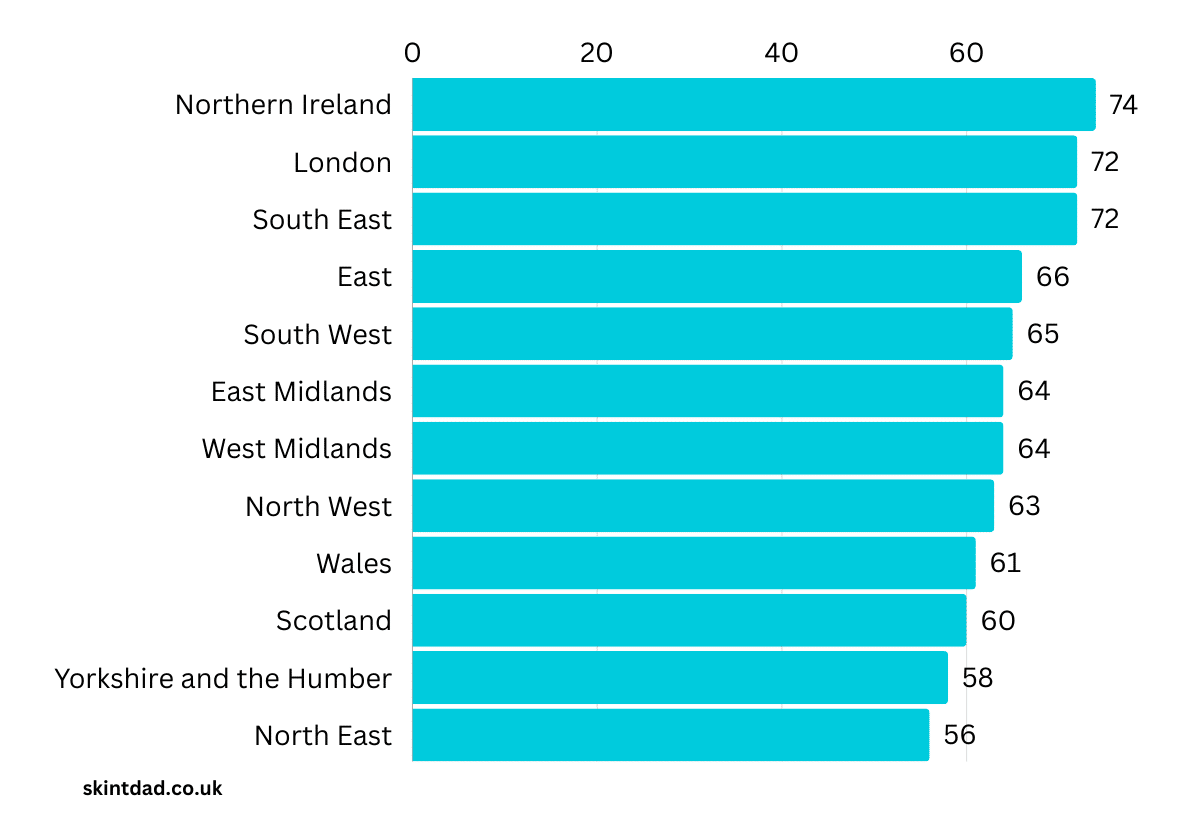
The averages also work out differently depending on where you live in the country.
Households in the South East, London and Northern Ireland typically spend more each week than those living in the North East and Yorkshire and the Humber.
Average food costs over time
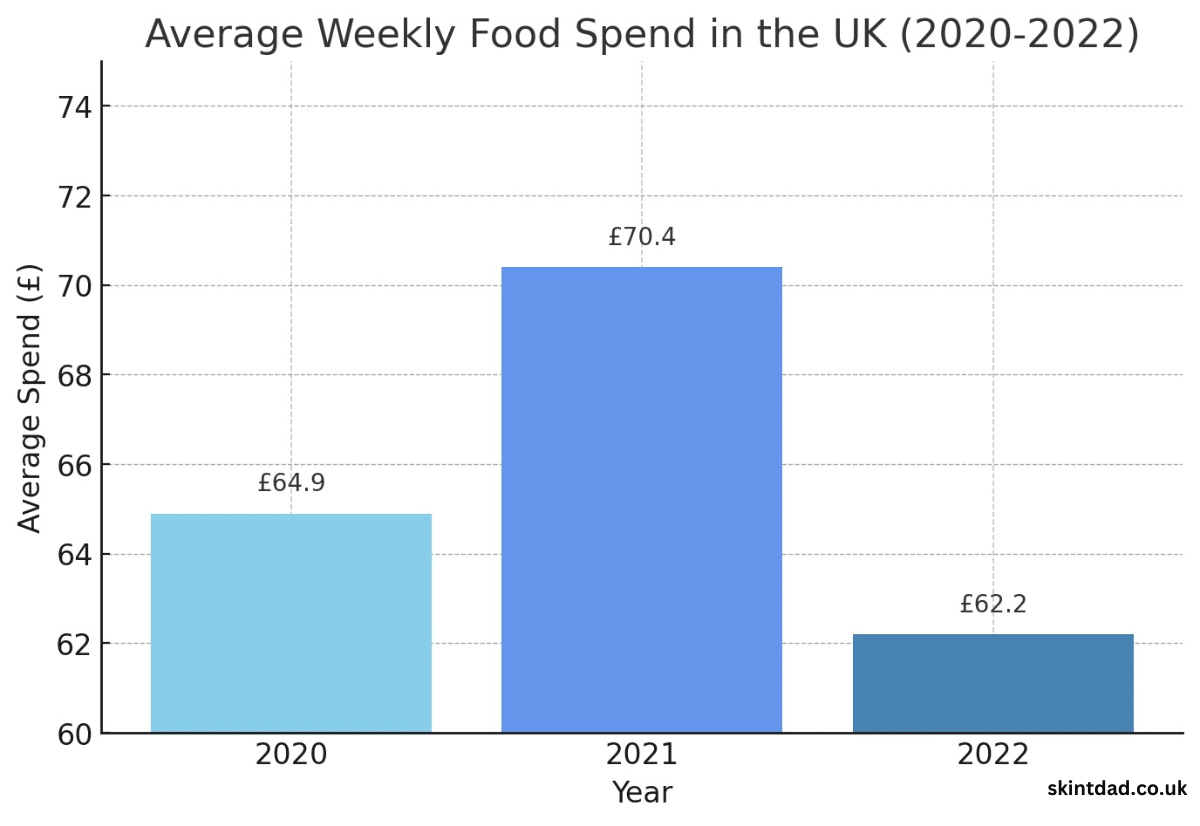
The average spending on groceries has changed over the years, going up when people were at home during COVID and then sharply falling:
- 2020 – £64.90
- 2021 – £70.40
- 2022 – £62.20
Weekly bill for one
Living alone? Based on ONS data, your weekly food bill might be around £33.50.
This covers all your meals, snacks, and even special weekend treats.
It’s important to remember that even though you’re only buying for one, you can still find clever ways to save, like batch cooking or buying store-brand products.
Weekly grocery bill for a family of four
A family of four in the UK spends about £86.30 weekly on food. On average, this works out to around £374 a month.
That’s breakfasts, lunches, dinners, and all the snacks in between for two adults and two little ones.
Feeding a family can be pricey, but you can make the most of every penny with smart shopping and meal planning.
Average weekly spend for two
If you’re part of a duo, your average weekly food shop might be around £63.70.
Whether it’s you and a flatmate or you and your partner, this figure can help guide your budget.
Cooking at home and planning meals can be a game-changer for saving money.
(Data is from the Living Costs and Food Survey from the Office for National Statistics.)
Understanding what others spend can give you a benchmark for your own grocery budget, and then you can still find savvy ways to cut down on your grocery spending.
It’s worth remembering that these are just averages – your spending may likely be different.
Depending on whether households have food intolerances, allergies, or specific diets that need to be followed, it can have a massive sway on how much is spent.
If you’re looking to budget, also be sure to take into account the average household bills each month too.

Saved a few quid with our tips?
If Skint Dad has helped you spend less or feel more in control of your money,
you can support the site with a small contribution.
