The UK’s new bottle and can deposit return system has moved another step closer, with business registration opening this week and new collection and recycling infrastructure being announced ahead of its launch on 1 October 2027.
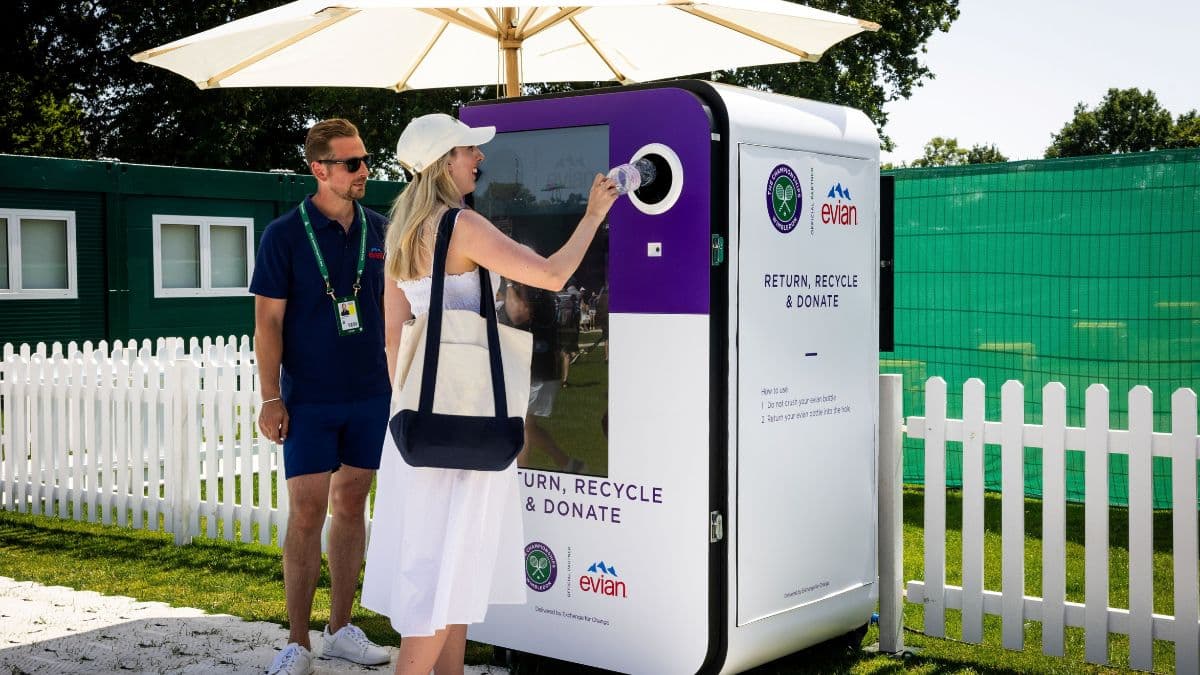
When the scheme starts, a refundable 20p deposit will be added to eligible plastic drinks bottles and cans.
But there is one part of the scheme that could surprise shoppers: you won’t need a receipt to claim the money back, and you don’t even need to have bought the drink yourself.
Get a sign-up bonus with Swagbucks
Earn a bit of extra money in your spare time with surveys, offers and other simple tasks you can do at home.
New users can currently get a bonus when they sign up.
Claim sign-up bonus
Defra’s official guidance says people will be able to return eligible containers they find, as well as their own.
That means an eligible bottle or can discarded by somebody else could be worth 20p to whoever legitimately picks it up and returns it.
Fifty could be worth £10, and 100 could be worth £20.
There are some important catches, though.
What has happened this week?
The 20p deposit itself isn’t new.
What’s new is that preparations are now moving into the rollout stage.
The first phase of registration for drinks producers and retailer return points opened on 29 September 2026.
Then, on 30 September, Exchange for Change announced five recycling and waste businesses that will collect and process returned bottles and cans across the UK.
Six processing facilities or processing lines are expected to be operating from launch, alongside around 400 collection vehicles.
Exchange for Change says the new infrastructure is expected to create around 700 jobs.
For households, there is nothing to do yet. But with the scheme now less than a year away, the system people will actually use is starting to take shape.
Who actually gets the 20p refund?
The answer is simpler than you might expect.
The refund isn’t tied to the person who originally bought the drink.
Defra says there will be no need for a receipt or proof of purchase. Its guidance specifically says people can return containers they find as well as ones they bought themselves.
The rules also make clear that the person returning an eligible container is entitled to the refund. They do not say that person has to be the original buyer.
So, if somebody leaves an eligible DRS can or bottle behind in a public place, someone else could pick it up, return it and claim the 20p.
That doesn’t mean people should take containers from private property or somebody else’s bins. We’re talking about containers genuinely discarded or littered in places where you can legitimately collect them.
Could collecting bottles and cans really make you £20?
Mathematically, yes.
At 20p per eligible container:
| Eligible containers | Refund |
|---|---|
| 5 | £1 |
| 10 | £2 |
| 25 | £5 |
| 50 | £10 |
| 100 | £20 |
That could give people a small extra reason to pick up litter while walking or taking part in a community clean-up.
We wouldn’t describe it as a serious side hustle, though.
There are rules around which containers qualify, their condition and how many a particular return point may reasonably accept.
Skint Dad has seen similar ideas before.
We covered Tesco testing reverse vending machines that rewarded shoppers for returning certain plastic bottles, as well as a similar Sainsbury’s recycling trial.
Those were individual supermarket tests. From October 2027, returning eligible containers for a deposit refund will become part of a much bigger national system.
You can’t save today’s cans and cash them in next year
Only containers included in the new scheme will qualify for the refund.
Eligible products will need to be identifiable as part of the DRS, including through their barcode and scheme markings.
So there is no point filling the garage with cans bought before the scheme starts and expecting to get 20p each for them in October 2027.
You haven’t paid a deposit on those containers, so there is no deposit to refund.
There could also be some old stock still on shelves after the scheme launches.
Exchange for Change says that in England, Scotland and Northern Ireland, drinks made and filled before 1 October 2027 can continue to be sold, so shoppers may initially see DRS and non-DRS containers alongside each other.
Only qualifying containers on which the deposit applies will be refundable.
What condition will bottles and cans need to be in?
Don’t assume you can crush every bottle and can flat before returning it.
Return points can refuse a container if they cannot identify it as an eligible item.
They can also refuse containers that are badly soiled, still contain liquid or are not intact.
A missing bottle lid on its own does not mean the container is no longer intact.
In simple terms, your safest option will be to empty the container and keep it in good enough condition for the return point or machine to recognise it.
More detailed instructions for shoppers are expected before the scheme launches.
Can a shop refuse a huge bag of cans?
Yes.
This is important when looking at the £10 or £20 examples above.
In England and Northern Ireland, the rules allow a retailer to refuse a return if someone brings in a number of containers that is disproportionately greater than the number of deposit items the retailer would normally sell to one customer in a single transaction.
So 100 qualifying containers may be worth £20 in deposits, but that doesn’t mean every small corner shop has to accept 100 of them from you at once.
Once the scheme is running, larger return points may be more practical if you have a lot of containers.
What could the 20p deposit do to your shopping bill?
This is another side of the scheme that matters for family budgets.
The 20p is a refundable deposit. It isn’t simply a permanent 20p increase in the price of the drink.
But you still have to find that money upfront.
If every can in a multipack qualifies, the deposits would look like this:
| Pack size | Deposit paid upfront |
|---|---|
| 6 cans | £1.20 |
| 10 cans | £2 |
| 12 cans | £2.40 |
| 18 cans | £3.60 |
| 24 cans | £4.80 |
A household buying a 24-pack could therefore need an extra £4.80 at the checkout.
Return all 24 qualifying cans and you get that £4.80 back.
Don’t return them and the deposits aren’t refunded.
For families buying several multipacks at once, the amount of money temporarily tied up in deposits could become noticeable.
Which bottles and cans are included?
In England, Scotland and Northern Ireland, the 20p scheme will cover eligible single-use drinks containers made from PET plastic, aluminium or steel and sized between 150ml and three litres.
PET is the type of plastic commonly used for fizzy drink and water bottles.
HDPE plastic, commonly used for milk bottles, isn’t included in the England and Northern Ireland scheme.
Glass is not included in the England, Scotland or Northern Ireland schemes.
Wales is different.
Where will you return bottles and cans?
Many supermarkets, grocery shops, convenience stores and newsagents will operate return points.
Some will use reverse vending machines that scan containers, while other returns may be handled manually.
Refunds can be offered in different ways, including cash, payment to a card or a refund voucher.
However, not every shop will be required to operate a return point.
There are exemptions for some smaller premises and businesses where operating a return point would not be practical.
That means it will be worth checking where your nearest suitable return point is once the scheme launches rather than assuming every shop selling a can of pop will take the empty container back.
What is different in Wales?
Wales needs explaining separately because its scheme works slightly differently.
Its Deposit Return Scheme will also start on 1 October 2027 and will cover PET plastic bottles and aluminium and steel cans between 150ml and three litres.
However, Wales is also including glass bottles.
The Welsh Government says glass will be part of its scheme from launch, but there will be a four-year transition period.
From 1 October 2027 until 30 September 2031, qualifying glass containers in Wales will have a deposit of 0p.
So shoppers in Wales won’t suddenly pay another 20p on every qualifying glass bottle when the scheme starts.
Glass will be collected within the Welsh system from launch, but it will carry a 0p deposit during the four-year transition period.
For shoppers, the simplest way to think about the difference is:
England, Scotland and Northern Ireland do not include glass.
Wales does include glass, but the deposit on it will initially be 0p.
When does the Deposit Return Scheme start?
The schemes are due to launch on 1 October 2027.
There is nothing households need to do now.
The activity happening now is about getting producers, retailers, return points, recycling facilities and collection systems ready.
But once the schemes start, the change will be very visible at the checkout.
Buy an eligible bottle or can and the deposit will temporarily make your shopping cost more. Return the container and you get the deposit back.
And unusually, that refund doesn’t have to go back to the person who originally paid it.
If somebody leaves an eligible 20p container behind and another person legitimately picks it up and returns it, they can claim the refund instead.
Add Skint Dad as one of your preferred sources.

Saved a few quid with our tips?
If Skint Dad has helped you spend less or feel more in control of your money,
you can support the site with a small contribution.
